Executive & Leadership Coaching
Steadier judgement, grounded in lived organisational context.
FOR FOUNDERS AND SENIOR LEADERS IN COMPLEX OPERATING CONDITIONS
I coach founders and senior leaders at the point where the decisions are harder and the room to think them through is smaller. Most of the leaders I work with are not struggling with self-awareness — they are in a structural situation the organisation has not given them the architecture to navigate: unclear authority, competing demands from HQ and region, a team that has grown faster than the accountability around it. The coaching works from those operating conditions outward, grounded in real-time decisions rather than abstract frameworks. That is what twenty years of senior HR leadership across complex operating environments makes possible.
I am ICF ACC accredited. My background includes more than twenty years of senior HR leadership experience at GE, Goldman Sachs, Meta, and Braze. That experience informs the conversation — it helps me recognise patterns and ask better questions — but the decisions stay with the leader.
Coaching often follows or runs alongside a fractional or diagnostic engagement. When the structural picture is clear, the next question is frequently a personal one — how you are making decisions, where your judgement is under pressure, and what you need to lead differently at the next level of scale. That is where we begin. Occasionally, the direction runs the other way — a coaching conversation that surfaces a structural question becomes the starting point for a diagnostic engagement.
How I work
Coaching engagements are structured and time-bound, typically running over three to six months, and sit alongside a demanding role rather than add to it. Sessions focus on framing live decisions, clarifying scope and authority, recognising patterns in how pressure affects judgement, and testing scenarios before committing to action.
Engagements are agreed upon individually. An initial conversation establishes fit before any proposal is made.
What brings people to coaching
- Your role has grown faster than the thinking time available to lead it well.
- Decisions that used to feel straightforward are taking longer — and the weight of them is not lifting between sessions.
- Something has shifted — in the team, the board relationship, or the scope of what you are running — and there has not been space to recalibrate.
- The pressure is coming from several directions at once, and the room to think it through clearly has compressed.
- We have worked together on a diagnostic or fractional engagement, and what the organisation needs structurally is clear — but what it asks of you personally is a separate conversation.
The aim is steadier judgement over time. Not insight that surfaces once and disappears.
Recent engagement
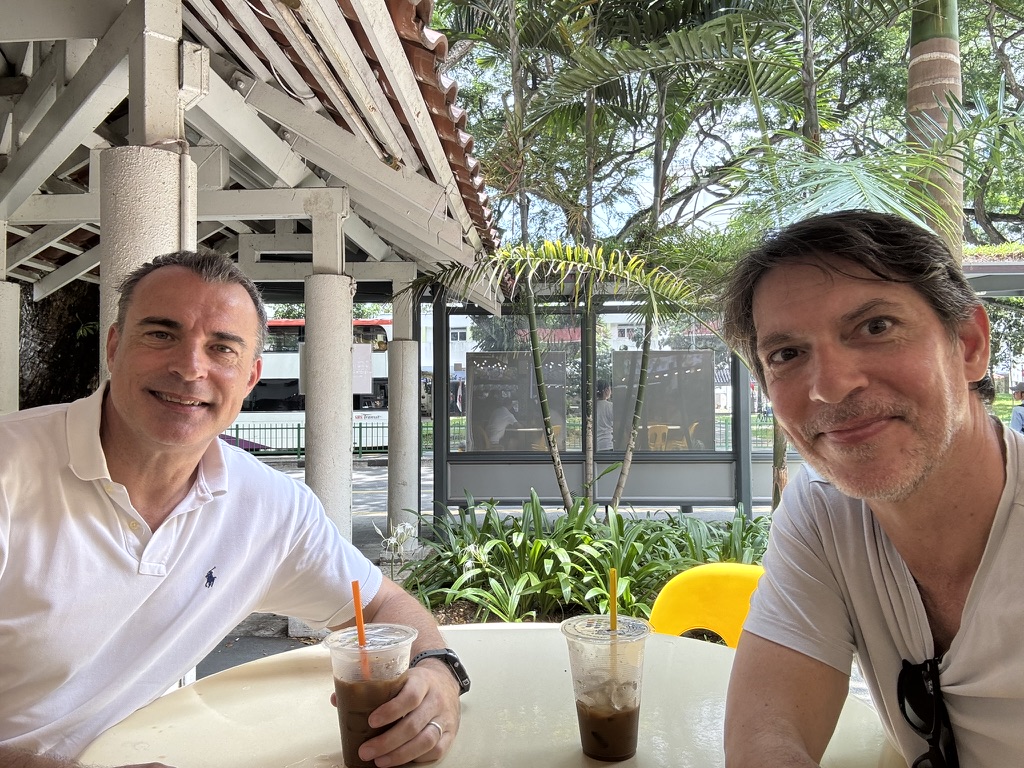
A founder and former CTO, cybersecurity, Singapore.
Navigating the shift from leading within a structure to running without one, with the pressure of early-stage growth compressing the space for strategic thinking. The coaching work focused on separating the decisions that needed his attention from the operational noise that was consuming it. What changed was not the workload. It was the clarity about which part of the workload was actually his job.
— Executive & Leadership Coaching, founder, cybersecurity, Singapore
Related: Fractional HR Leadership · People & Governance Diagnostic · Meridian™ Organisational Capability Diagnostic
Common questions
Get in touch